
Margaret Sanger at Old South Meeting House
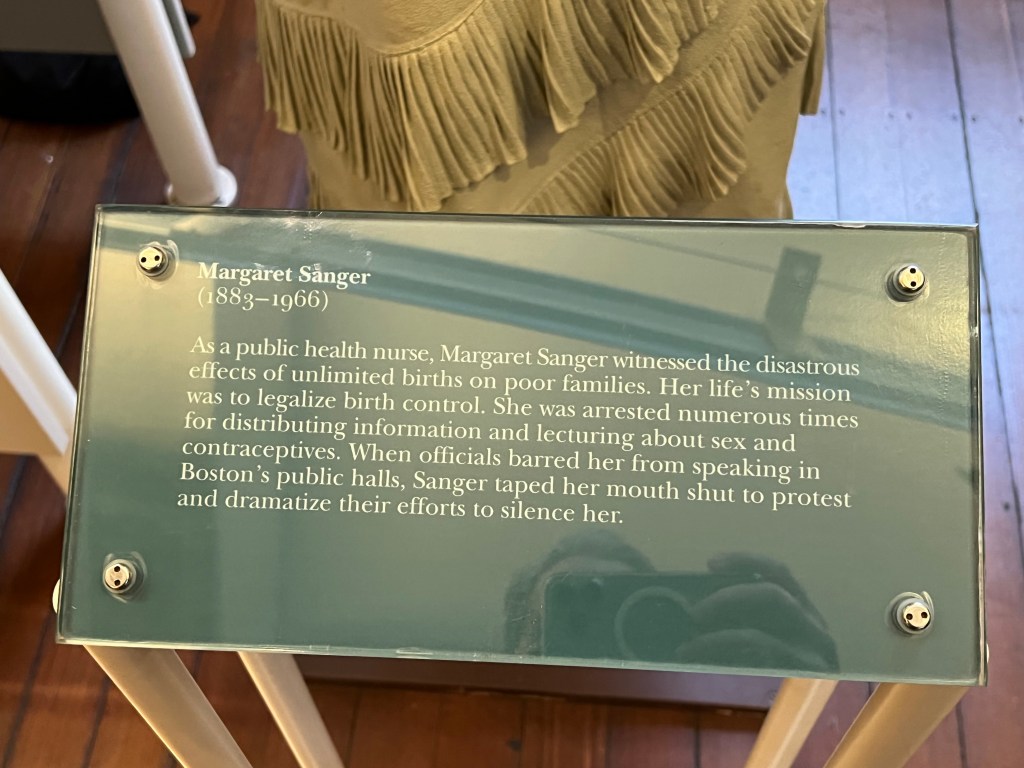
I was recently in Boston and found a life-size sculpture of my grandmother in the Old South Meeting House. The accompanying caption had her birthdate wrong (she always took years off her age – she was born in 1879) but it has a refreshingly positive summary of her life and work – to legalize birth control.
Mayor Curley indeed prohibited her speaking in Boston in 1923, 1924 and 1925. In 1925 the enlightened citizens of Boston held a meeting at Old South Meeting House to protest. He also banned the KKK since they were anti-Catholic, among other things. Curley was term limited, and his successor, Malcolm Nichols, continued the ban, and when in 1929 Ford Hall invited my grandmother and other illustrious radicals and rebels to speak at their annual banquet, only Margaret Sanger was prohibited from addressing the crowd. She strode onto the stage with a gag taped across her mouth and handed her speech to professor Arthur M. Schlesinger, who proceeded to read it.
From her speech April 16, 1929:
“To inflict silence upon a woman is supposed to be a terrible punishment. It is. But there are certain advantages and benefits to be derived from this awful punishment. . . . Silence inflicts thoughts upon us. It makes us ponder over what we have lost – and what we have gained. Words are, after all, only the small change of thought. If we have convictions, deep convictions, let us not waste them in words. Let us act them out. Let us live them!”
…
“I care nothing for Free Speech in and by itself. All of us place too much value on the power of the printed word and the power of the spoken word. We read too much. We listen too much. We live too little. We act too little. . . . I speak to you by my actions past and present. I have been gagged, I have been suppressed, I have been arrested, I have been hauled off to jail. Yet every time, more people have listened to me, more have protested, more have lifted their own voices, more have responded with courage and bravery. . . . As a propagandist, I see immense advantages in being gagged. It silences me, but it makes millions of others talk about me, and the cause in which I live.”
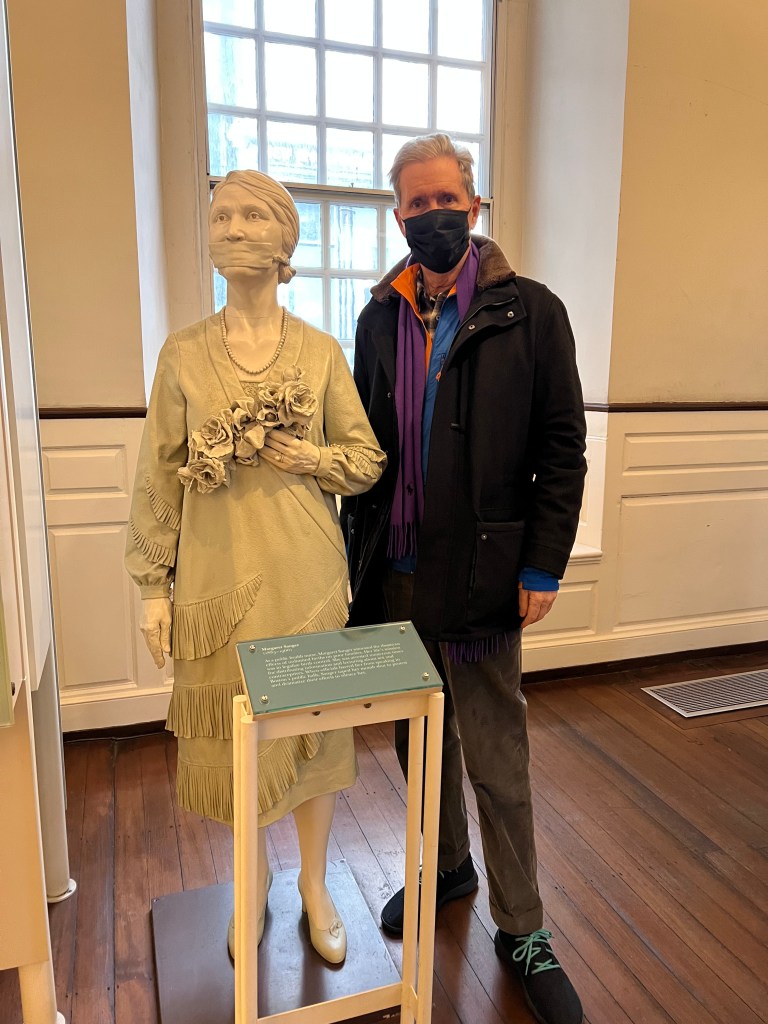
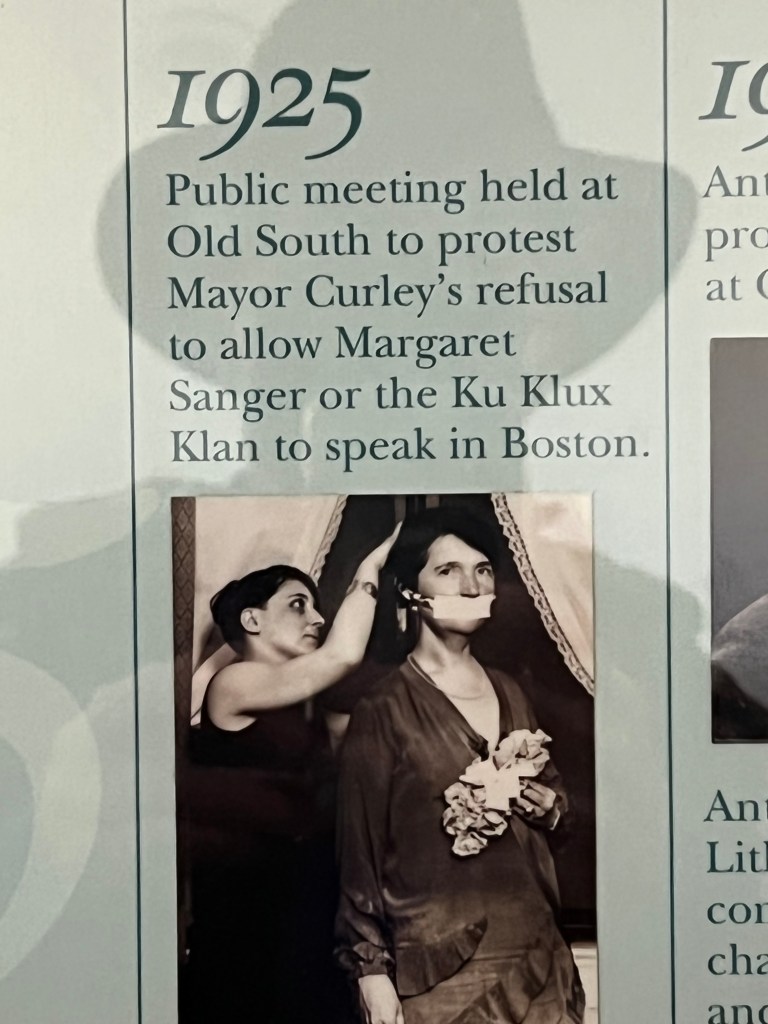
In 1999, Barbara Walters called it “Perhaps this century’s first photo op.”
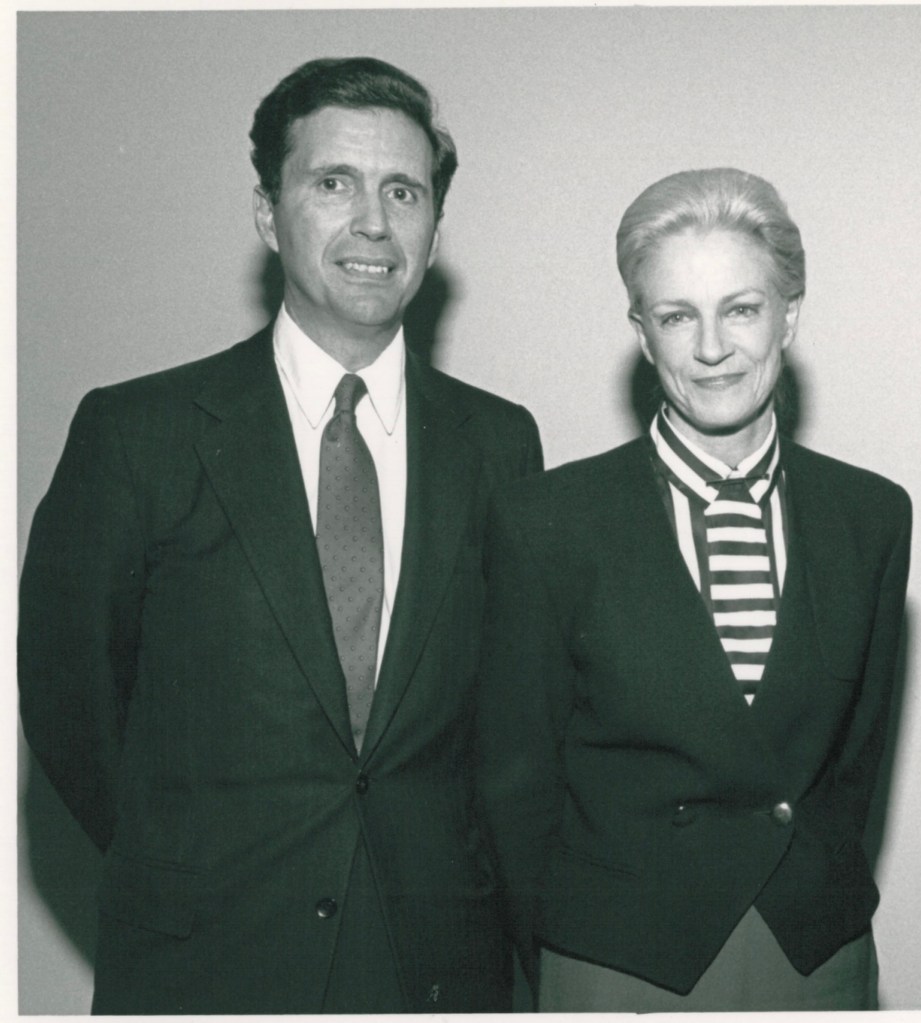


 Alexander Sanger