Visit to BFLA – Belize

November 10-13, 2026

I spent last week in the Central American nation of Belize to visit the clinics of the Belize Family Life Association, the partner of Fos Feminista in that country.

Belize is a country with ancient, crumbling Mayan ruins, multicolored toucans cawing in the jungle canopies, offshore coral reefs teeming with tropical fish and massive banana plantations that supplying nutritious breakfast staples (and Banana Daiquiris) to much of the Northern Hemisphere. I saw none of this.

Belize is also a country of low-lying, oft-flooded marshland, verdant mountains in the south interspersed with spotty scrubland. It faces the Caribbean, and is backed up by Mexico and Guatemala to the west, north and south. There is one road to Mexico and one to Guatemala.

I was there in the rainy season, and it rained, and rained substantially, every day.

Belize is a nation of mixed heritage, mixed economic strata and mixed productive and unproductive farmland. The population of 400,000 is of mixed heritage, including Mayan, African, Spanish and Creole. There is a large undocumented migrant population coming in from Guatemala, Honduras, and El Salvador. They cannot access the healthcare system without the requisite Social Security card.

Health Indicators

Economically, Belize is categorized as upper middle income by the World Bank and is in the middle on a per capita income basis of Central American countries, trailing Panama and Costa Rica, but wealthier than Nicaragua, Honduras and Guatemala. Compared to island nations, it trails the Dominican Republic and is about level with Jamaica. There is substantial income inequality and about half the children live below the poverty line.

The birth rate is about 2.0, but Belize has a very high adolescent pregnancy rate, the second highest in the Caribbean after Guyana. There is a high incidence of child marriage with about a third of girls married or in a union before age 18. However, the age of marriage law has just been raised to age 18.

There is a gap in health services for youth ages 13 to 15. Youth ages 0 to 12 are covered in the youth clinics, and those age 16 and over are covered in the adult health system. The age of consent for sexual activities is 16. Therefore, girls age 13 to 15 who are pregnant are faced with seeing providers who are required to report the pregnancy to the legal and welfare authorities, which could lead to violence against the girl. Hence, these girls are reluctant to see providers, and providers are reluctant to see these girls.

Many of the Mayan women give birth at home, and their husbands deliver the babies. About two-thirds of the population is under age 30.

Abortion is partially legal in Belize. There are three instances where abortion is permitted: one, the health and well-being of the mother – with a very broad definition of health, including mental and emotional health; two, the condition of the fetus; and three, the effect of another birth on the existing children in the family and whether it would be a detriment to those children. The first two exceptions require the permission of two OB-GYNs. The third exception requires a social worker investigate the family situation. There is no specific rape or incest exception; however, it is the opinion of legal authorities that a woman who is the victim of rape or incest is psychologically and emotionally unable to give birth and have a child and therefore would fall under the first exception.

BFLA does medication abortion but not surgical abortion. They do tubal ligations but not vasectomies.

How BFLA Survives and Thrives

There is a national healthcare system, with one tertiary hospital in Belize City and smaller regional hospitals. The health department does have smaller health clinics, but BFLA does not co-locate with them because they do not think the government clinics operate with sufficient cultural sensitivity.

There is universal health coverage – the National Health Insurance (NHI) which does cover reproductive healthcare, including contraception. The main problem is not just distribution of contraception in rural areas to those in need, but the lack of availability of the contraceptives themselves everywhere. While we were there, there was a stockout of Depo-Provera, for instance, and Fos Feminista is working to fill that gap through its Innova subsidiary. Medical supplies in general are a major issue with the foreign aid cuts to USAID, UNFPA and UNAIDS.

So, how does BFLA fund its operations? Through Social Enterprise. BFLA was facing financial challenges two decades ago because of its policy of serving all those in need of reproductive health care whether or not they could pay. They decided that a new business model was necessary to keep its door open for those in need and that model was to become an accredited provider under NHI.

There are only four providers in the country who are accredited by NHI as primary care providers, one now being BFLA, the Fos partner organization in Belize. Hence, BFLA is now a primary care provider in addition to providing reproductive healthcare. It is the only nonprofit organization who is an accredited NHI provider. BFLA operates five clinics and mobile health services. It also supplies contraceptives to other providers.

The strategy to expand its services beyond reproductive health care into primary care was not just for financial reasons but also because BFLA clients needed primary care. BFLA clients, due to geography, language, poverty, discrimination and other factors, were disproportionately suffering medical conditions early in life which affected their ability to be sexually healthy, become pregnant, or not, have a successful pregnancy and raise a child. Primary health care was thus inextricably intertwined with reproductive health care and rights.

BFLA reinvests the surplus generated by primary care services in order to provide services for those who are not covered by NHI, as well as providing sexuality education and outreach to migrant and indigenous communities.

BFLA gets paid Belize dollars 4.14 per month for each patient or about US$2.00. They also generate a surplus from its pharmacy. Last year, BFLA provided 63,000 sexual and reproductive healthcare services and 174,000 other primary care and laboratory services.

Another social enterprise program was the creation of BFLA After Dark, the acronym being BAD, where they sold sex toys and created workshops on healthy sex and pleasure.

They have an efficient laboratory system and can get Pap smear results back to a woman in rural areas within two weeks. Under the government system, it took two years.

Clinic Visits

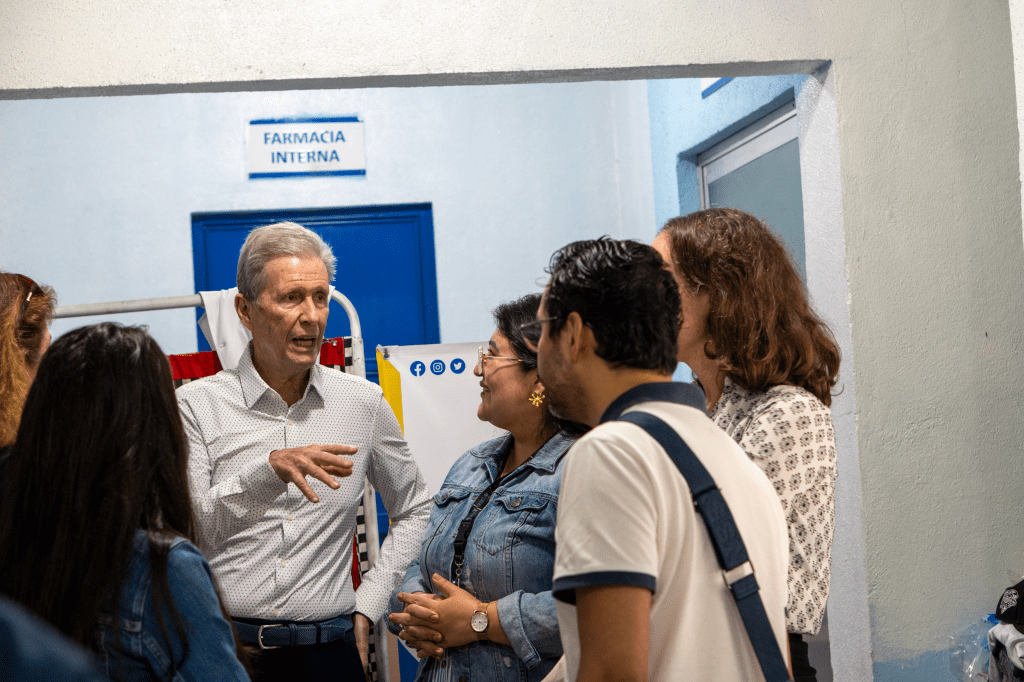
I visited the main clinic of BFLA in Belize City. It is open 7 AM to 6 PM five days a week. It is a two-story building, and they are hoping to add on a third floor for a youth clinic. They operate a pharmacy there which sells all kinds of medications, prescription and nonprescription. There is a separate entrance for youth who go up to the second floor to a separate youth space. Respiratory illness has a separate diagnostic room, but there is also diagnosis for diabetes, high cholesterol, high blood pressure, and other medical issues. They do immunizations for the children and general pediatric work. They are now starting ultrasound services. BFLA offers psychological services also.
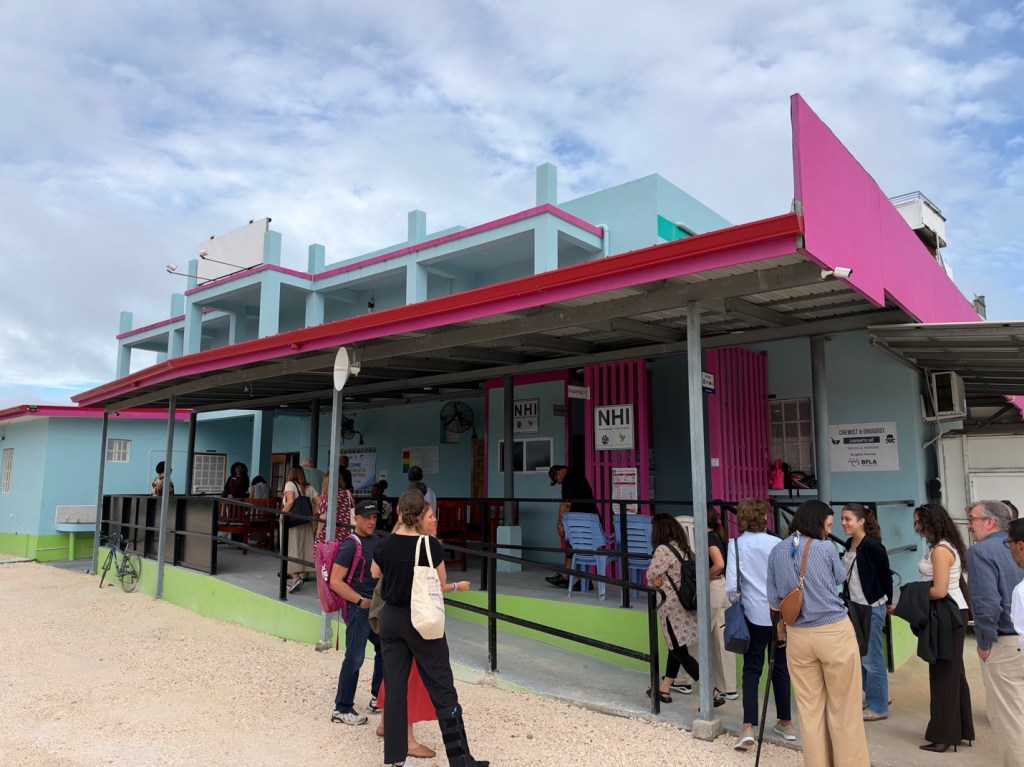
BFLA Main Clinic

I went to the southern part of the country by a van passing mostly uncultivated land with scrub vegetation on it. There is also extensive marshland, and the one cemetery I passed was built with coffins being interred above ground as in New Orleans. Moderately high hills appeared the further south I went. I went through three police checkpoints, which were checking for drugs being smuggled up towards the Belize City.

I had the goal of visiting a banana plantation where BFLA brings its services directly to the farm workers living there. However, heavy rains caused flooding, and the roads were impassable, so instead I went to a small mobile clinic that had been set up on the grounds of a community church in the village of Stann Creek where three outreach workers from BFLA and the Ministry of Health together were seeing women and children from that neighborhood for a variety of health conditions. The nurse and the outreach workers visit this particular village three times a year.
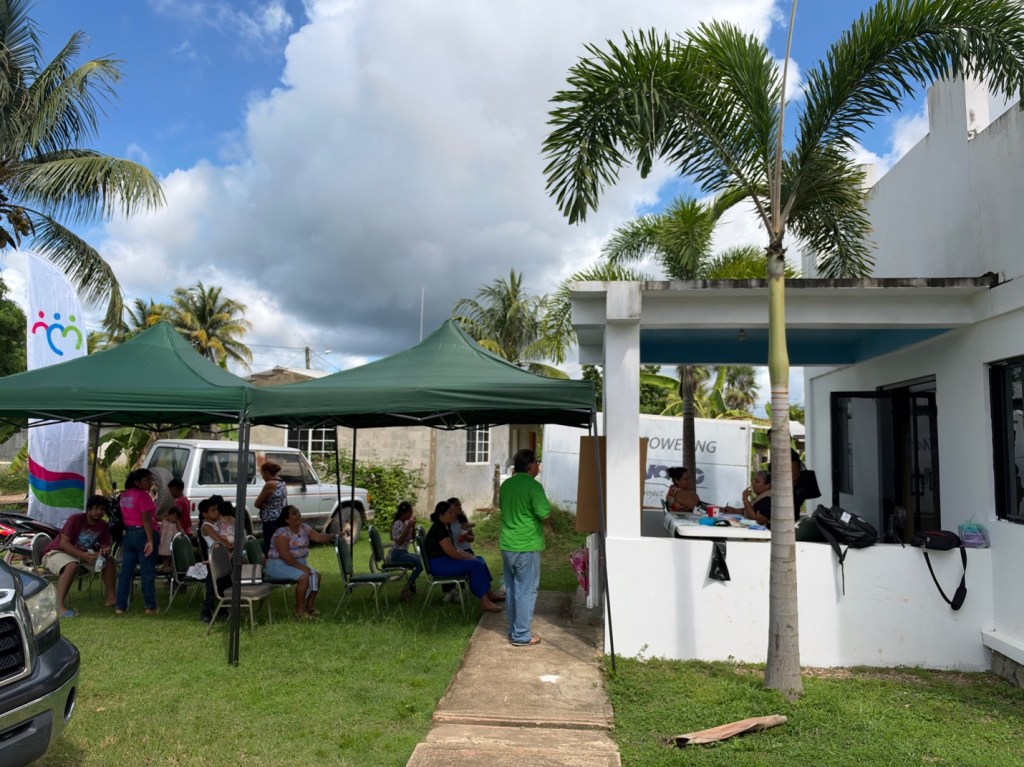
Stann Creek Mobile Clinic

The women had walked there or had ridden motorcycles, often walking for over half an hour. The clinic was set up under a tent with a back office inside the church’s community building, so that the provider could see women in private. The chickens in a neighboring coop let us know they were there. Laundry hung from neighboring buildings and was hastily removed when the rains came.

The nurses did screening for blood pressure and weight; two women were referred for additional care for hypertension. There were no Pap smears being done that day. Blood is drawn to check for cholesterol, among other conditions, like diabetes. There was a presentation in Spanish by the outreach worker on breast self-exams, to which the women paid rapt attention. The children were all very well behaved while this was going on.
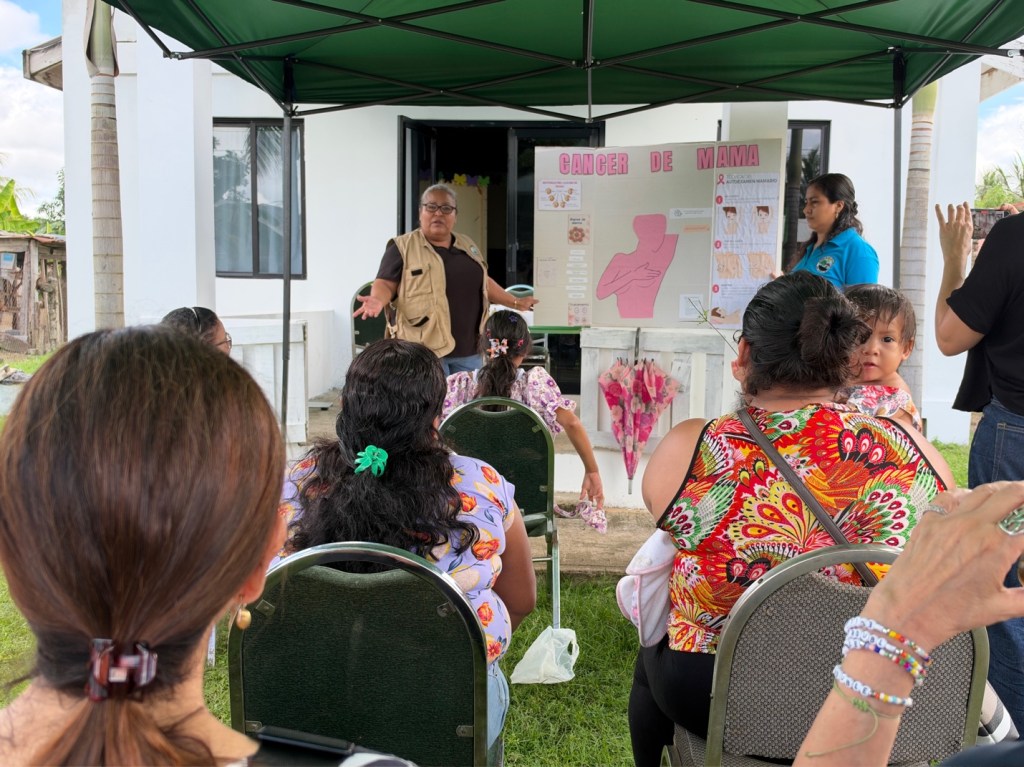
Breast Self-Exam Workshop

We then visited a nearby BFLA clinic in Dangriga where BFLA is creating a soap making subsidiary, starting in February. Another social enterprise venture! They had a machine donated by the government, and they will be making bars of soap as well as hand soaps, shampoos, conditioners, and liquid hand cleansers. They hope to supply hotels with bottles of shampoo and conditioner, as well as supplying clinics and doctors’ offices with hand wash.

Conclusion

BFLA is an impressive organization doing much needed work under difficult circumstances.  I am proud to be supporting them.
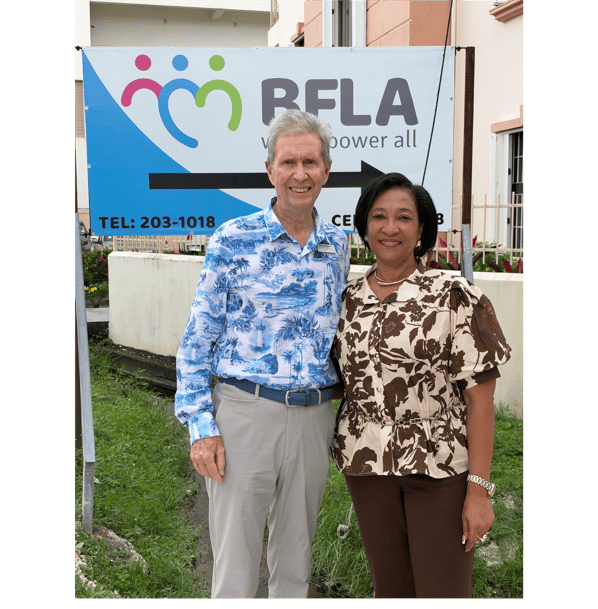
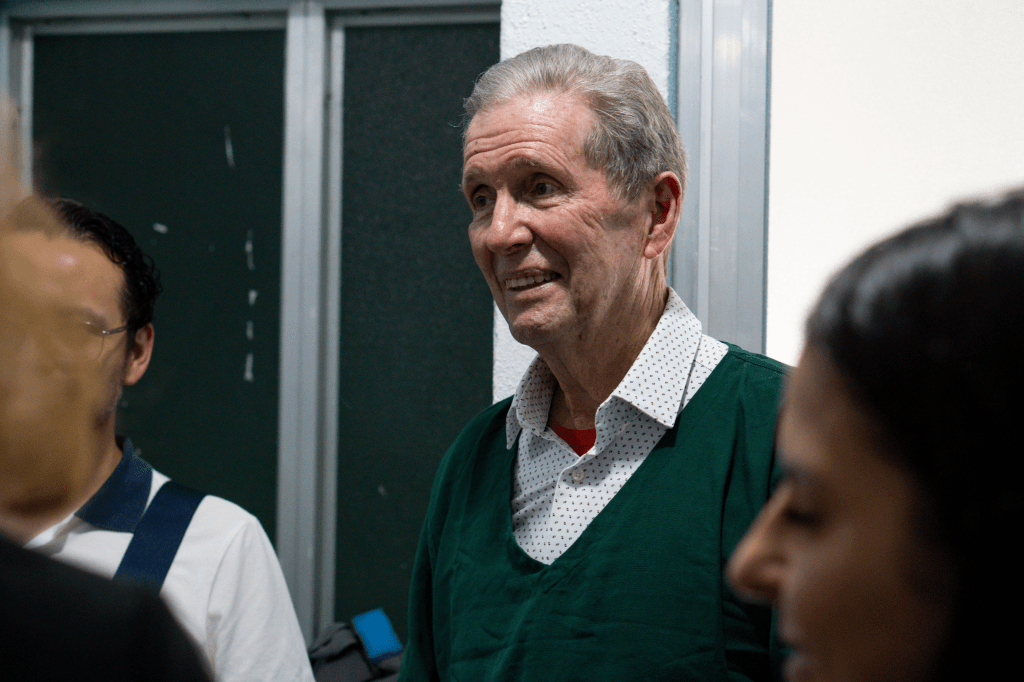
ACS with BFLA Director Joan Burke
Gloria

Stories have abounded in the media in the past week about Gloria. I think she would say, “Enough already…start organizing!”

This is not one of those stories.

Back in late November 1979, my wife, Jeannette, and I were traveling to St. Maarten for a romantic long weekend. I pack a gourmet picnic for the trip, figuring that whatever airline we were flying on would have inedible food, if any. We arrive at JFK only to find the flight is delayed 2 hours (no internet texts announcing flight delays back then). Deciding that no time like the present, we sit on the floor of the departure gate and unpack our feast. Who should beeline across the crowded room but Gloria. “Hi Alex. Hi Jeannette.”  

“Hi Gloria,” I say feigning enthusiasm, knowing full well what is going to transpire.

“This is Stanley Pottinger,” she says introducing the man trailing behind her. “You going to St. Maarten? Where are you staying?”

We are all headed to the same hideaway resort hotel. Romance is in the air, and so is our picnic.

I see no way out of this one and invite them to join us. Gloria and Stan haven’t brought so much as a chicken sandwich between them. Gamely I offer to share our feast: caviar, blinis, crème fraiche and smoked salmon (we were still newlyweds). It was all gone before you could say, “Keep your belongings in sight at all times.” Let’s just say, Gloria was not watching her weight that afternoon. 

We separate at the hotel and are enjoying our romantic selves when on our final night after dinner in the hotel restaurant we encounter Gloria and Stan in the lobby. “We’re going into town to go dancing,” Gloria says. “Come join us.”

“Of course,” we say, and off we went in a taxi into the Caribbean night where Gloria found a nightclub that was open at the ungodly hour of 9pm with a DJ playing uninspiring fare while waiting for the hip late night revelers to appear. Unfazed, we had the floor to ourselves and danced and danced. That was Gloria – irrepressible, passionate, engaging, inspiring, fun. It was an honor to be alongside her on and off the dance floor.

P.S. Stan picked up the bill. We were even. 

Victory in BraZil

This past Friday, Supreme Court Justice Luís Roberto Barroso issued landmark decisions in three major cases led by Fos Feminista partners — ADPF 442, ADPF 989, and ADPF 1207 — marking a transformative moment for sexual and reproductive rights in the country. In one of the cases, Justice Barroso reaffirmed the unconstitutionality of criminalizing abortion up to 12 weeks of pregnancy, strengthening the path for decriminalizing abortion in the country. In the other two cases, his decisions pave the way for expanding access for those seeking abortion under the current exceptions (rape, risk to life and anencephaly) allowed in Brazil.

There is much work ahead, but this is a great first step for the women of Brazil to reproductive Justice.

Birth rates, Fertility and What To Do

The CDC reported last week that births increased by just 1 percent in 2024 with the fertility rate (TFR) remaining level at about 1.6, well below the 2.1 level needed to maintain the population level through births alone (i.e. without immigration). 

At the same time, the Guttmacher Institute estimated that clinician-provided abortions in 2024 in states without a total abortion ban increased also by slightly less than 1 percent from 2023. There were additional abortions of an undetermined number that were not clinician provided. 

The Trump Administration is considering ideas to increase the birth rate, among them a $5,000 baby bonus, tax credits for children, increasing the availability of IVF, and awarding medals to mothers of a certain number of children. Worldwide incentives of this sort have been largely money wasted. My October 16, 2024 post talks about Norway and Hungary’s futile efforts to increase their birthrates. At most, incentives have speeded up childbearing but not increased the number of desired children. Russia awards an Order of Parental Glory to parents of large families. It hasn’t stopped the decline in the Russian TFR. A similar award in France has had no effect either.

The Administration’s cutting of Title X funding for family planning and threatened cuts to Medicaid program (as well as criminalizing abortion if they seek a nationwide ban) will perhaps serve to increase unintended childbearing, especially among teens. The decrease in the national TFR has come because of a reduction in teen pregnancy over the years largely due to better and longer-lasting contraception. Teens and young adults are also reporting having less sex. Criminalizing abortion further and reducing access to contraception may serve as further deterrents to sex and hence pregnancy, but I suspect the pregnancy and childbearing rates will rise among those without access to private family planning services, i.e. the poor and minorities, exactly the groups that the conservative White Replacement Theory folks don’t want to reproduce. 

The issues around infertility and IVF are tying the Administration in knots given the sway of absolutist anti-abortion people in policy circles. The imperatives of couples wanting a child by any means often outweigh their beliefs on abortion. 

The causes of infertility in males and females are debated, but one thing is sure: sexually transmitted infections can cause infertility. And the Administration by cutting reproductive health care programs will be increasing STIs and hence infertility. 

Who ever said politics makes sense. 

The Forest obscuring the Trees

In the midst of the tariff forest, or conflagration to switch the metaphor, we cannot lose sight of the trees – Administration’s devastating attack on reproductive, and general, health of people here and abroad. And the attacks are just beginning.

The Administration has suspended Title X funding for family planning clinics in this country but also USAID grants for reproductive and other health around the world. Title X supports the provision of reproductive healthcare, including family planning and the treatment and prevention of sexually transmitted diseases in family planning clinics in this country. Many of those clinics are operated by Planned Parenthood. None of the funds can be used for abortion services. A total of $66 Million in Title X funding has been suspended, including $21M for Planned Parenthood clinics. These programs have been audited repeatedly to make sure that this does not happen, yet this administration under the guise of fiscal probity has suspended the funds to do yet another investigation. The effect of this suspension will be that clinics will be turning away low-income patients who will have nowhere else to go and will lead to increases in sexually transmitted infections, cervical cancer and pregnancy rates, and therefore abortion rates.

The next shoe to drop is probably Medicaid funding going to Planned Parenthood and other reproductive healthcare clinics. Medicaid funding reimburses clinics for reproductive healthcare visits, including family planning and sexually transmitted disease provision for clients who are eligible for Medicaid. If and when these cuts are enacted, and there are sure to be challenges because these funds are budgetary provisions, enacted by Congress, and it will lead to the closure of many family planning clinics nationwide. Patients will have nowhere else to go. On top of this, the Supreme Court this week heard arguments about whether or not states can prohibit Medicaid recipients from using clinics which also provide abortion services, i.e Planned Parenthoods. Planned Parenthood receives about one-third of its revenue from Medicaid and Title X.

Planned Parenthoods nationwide are facing huge budgetary pressures, as are many healthcare providers, with rising costs, especially salaries for nurses, doctors and other trained personnel. My old affiliate, Planned Parenthood of Greater New York (PPGNY), recently announced that they were putting up for sale the building that houses its Manhattan clinic and would be closing the clinic. They said they hoped to open in Manhattan clinic at another site, but there are no definite plans. The affiliate, along with many other Planned Parenthood affiliates nationwide, have been closing under-performing clinics because they cannot be subsidized in the current climate. PPGNY and PP Illinois have recently closed four clinics each. This has led to greater travel, and other costs, being imposed on rural patients, as well as delay and forgoing of health care.

Planned Parenthoods around the country that provide abortion services are inundated by patients from states where abortion has been criminalized. The resulting subsidy that patients need, including travel costs and accommodations, as well as the fees that they are unable to pay are devastating the finances of Planned Parenthood. This is a human and public health crisis, and states that keep abortion legal must do more to make abortion as safe and accessible as possible. Women are going to resort to do-it-yourself abortion and not under a doctor’s care which could lead to injury and death. Those doctors who are mailing abortion pills internationally and across state lines are not reaching every woman who needs an abortion. About half of women coming to Planned Parenthoods nationwide are using abortion pills, but many are opting for surgery because the procedure can be done in the same day and the woman can return home without delay or risk of needed a followup visit in a state where abortion is criminal.

There is a curious intersection, and disconnect I believe, with much of the conservative ideology about white supremacy. The attacks on Planned Parenthood will reduce reproductive healthcare as well as abortion services in areas with large white populations. If the conservatives hope as a result the white birth rates will go up, that might happen (preliminary data shows an increase in births in criminalized states – the abortion rate has also gone up!). But these attacks will also end up resulting in the closure of clinics serving minority populations, so those birth rates will also go up. In all cases, there will be an increase in sexually transmitted diseases (and illegal abortions), which in many cases cause infertility, thereby decreasing the nation’s ability to increase the birth rate. Talk about counterproductive.

The middle of all this chaos, families have to sort out whether and when to have children. One of the factors that men and women will take into account is how they view the future. Certainly the tariff chaos will give financial pause to many in every state and of every political persuasion. People are now poorer than they were a month ago, and one can question whether they see any light at the end of the Trump tunnel. Some conservatives are beginning to see that they should offer incentives for married couples to have children, though incentives offered in various countries around the world have done little or nothing to increase birth rates.

The intersection of the tariff policy with the anti-immigration policy gives political concern. Many areas of this country have seen population growth and economic vitality from immigration. If these areas are depopulated through deportations, the economies there will stagnate and decline. One US study called it, “Depopulation, Deaths, Diversity and Deprivation: the Four D’s of Rural Population Change.” This scenario played out in the former East Germany recently, an area where people of ability left for greater opportunity in the former West Germany, leaving behind people with fewer opportunities and social services, who were full of resentment, and therefore voted for far right political parties. This would naturally buoy the Trump party even though he was the cause of it all.

Nita Lowey and Alan Simpson

What a force Nita Lowey was. Tenacious supporter of women’s and reproductive rights, she was at our side, and leading, in every major Congressional battle over women’s access to reproductive health services here and abroad. Her office was the first we would call when some new threat would emerge from the Neolithic swamps of the Reactionary Right. Nita would pick up the phone herself and lead the counter strategy. She was solid, and we knew she would never waver.

As for Alan Simpson, Republican Senator from Wyoming, I give credit where credit is due. He was a steadfast supporter of reproductive rights when that stand was growing increasingly unpopular in his Republican Party. I met him in Cairo when he attended the 1994 UN Conference on Population and Development, lending the US delegation bipartisan support for an agenda that included expanded family planning efforts. He voted against ban on late term abortions but was not supportive of Federal funding for abortions except in limited circumstances.

Irony indeed that Nita Lowey and Alan Simpson clashed heatedly over Anita Hill and Clarence Thomas, a clash that Simpson later regretted. He voted to put anti-Roe Justices on the Supreme Court, saying, “I wanted people on the court regardless of ideologies. I wanted credible public servants with brains.” I don’t think he got them.

Beyond the global gag rule

Given the fast place of announcements out of Washington, by the time you read this parts are sure to be out of date. That said, Fos Feminista has prepared an analysis of the anti-rights, anti-gender views and programs proposed by Geneva Consensus Declaration (GCD),

Women’s Optimal Health Framework (WOHF), and Project 2025 which together attack reproductive rights and bodily autonomy. The threat, as we have seen in the last few days, is real. Whether and in what form USAID (and foreign aid for family planning and disease prevention) survives is an open question.

Just one example of the non-reality thinking, Project 2025 states, “married

men and women are the ideal, natural family structure”. Not so natural in reality though. In Latin America 75% of births are born outside of marriage. And these are Catholic countries.

And sex ed, say the three, is to be abstinence and faith based. The list goes on.

The report is here.

The Global Gag Rule is Back

We have been here before – the ping pong ball of reproductive rights and health ricochets back and forth as administrations change – now the Global Gag Rule is back, restricting what reproductive health providers can do around the world. The result: reduced services for women and girls (and men and boys) resulting in more unplanned pregnancy and abortion. This has been studied, and the results are enumerated in the following article. The damage is real.

https://www.guttmacher.org/report/evidence-for-ending-global-gag-rule