photographer, Jorge Dávila
photographer, Jorge Dávila
On Dec 8-10, 2025, I went to Antigua, Guatemala to visit two Fos Feminista partner organizations and to attend a Fos board meeting. Antigua is surrounded by 4 volcanoes, one of which was smoking. The nation’s capital was once in Antigua but multiple earthquakes in the 1700s led the Spanish authorities to move the capital.
Guatemala is the most populous country in Central America with over 18 million people. The country struggles with persistent inequality. The population is primarily Mestizo, but Indigenous Maya communities make up about 35 percent—the highest proportion in the region. Guatemala is home to 22 Mayan languages, which makes delivering health care challenging. Poverty is widespread. In 2023, 56 percent of Guatemalans lived in poverty, with 16 percent in extreme poverty. Rural communities and Indigenous peoples are disproportionately affected, with poverty rates exceeding 80 percent in some areas. Malnutrition among children is alarmingly high: 46.5 percent of children under five suffer chronic malnutrition, one of the highest rates globally.
Guatemala faces a critical sexual and reproductive rights crisis. Adolescent pregnancy rates, particularly in rural and Indigenous communities, are among the highest in Latin America. Many of these pregnancies result from sexual violence, highlighting deep gaps in child protection and support systems. Early pregnancy often forces girls to leave school, limiting their opportunities and perpetuating cycles of poverty. 1 in 3 Indigenous women have no access to health and family planning services. 25% of teen girls are pregnant or parenting. The birthrate is 2.4.
Challenges in the country have been further exacerbated by the recent US funding cuts to USAID and UNFPA which brought $605.5M in support for global family planning and reproductive health programming and services to an abrupt end. Guatemala was among the largest losers of funds. Birth control pills are currently out of stock in government clinics.
The country has some of the most restrictive abortion laws in the world, permitting the procedure only when the life of the pregnant person is at risk. In practice, even these cases are difficult to access. Medical professionals often interpret the law narrowly, and social stigma further discourages care. As a result, many girls and women are forced to continue pregnancies, even in cases of rape or when their health is at risk. Illegal abortions proliferate.
The two Fos partners there are:
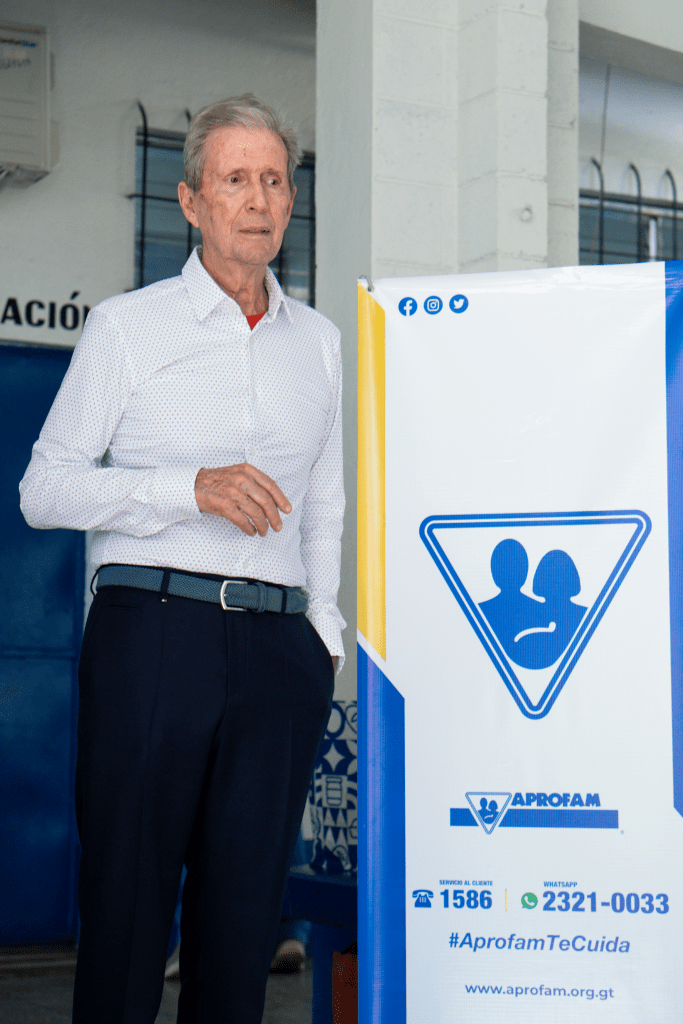
Founded in 1964, APROFAM (Asociación P r o B i e n e s t a r d e l a Fa m i l i a de Guatemala) is a long-standing partner of Fòs Feminista and one of the largest providers of sexual and reproductive health care in Guatemala and within the Fòs Feminista Alliance. In 2024, APROFAM provided more than 2.7M sexual and reproductive health services, including nearly 975,000 contraceptive services. APROFAM provides subsidized SRH services primarily through its clinics and occasionally through mobile clinics in collaboration with the Ministry of Health. It also offers general medical care including pediatrics.
And
WINGS (Women’s International Network for Guatemala Solutions) has been a Fòs Feminista partner since 2019. Founded in 2001, WINGS provides quality, free or subsidized reproductive health education and services to low-income, rural, and Indigenous populations, reaching around 25,000 individuals annually. Their model is complementary to APROFAM in that WINGS focuses predominantly on rural, Indigenous, and underserved provinces in Guatemala that are not reached either by APROFAM or the public sector. In 2025, WINGS reached an important milestone in expanding their mobile health outreach to every department in the country.
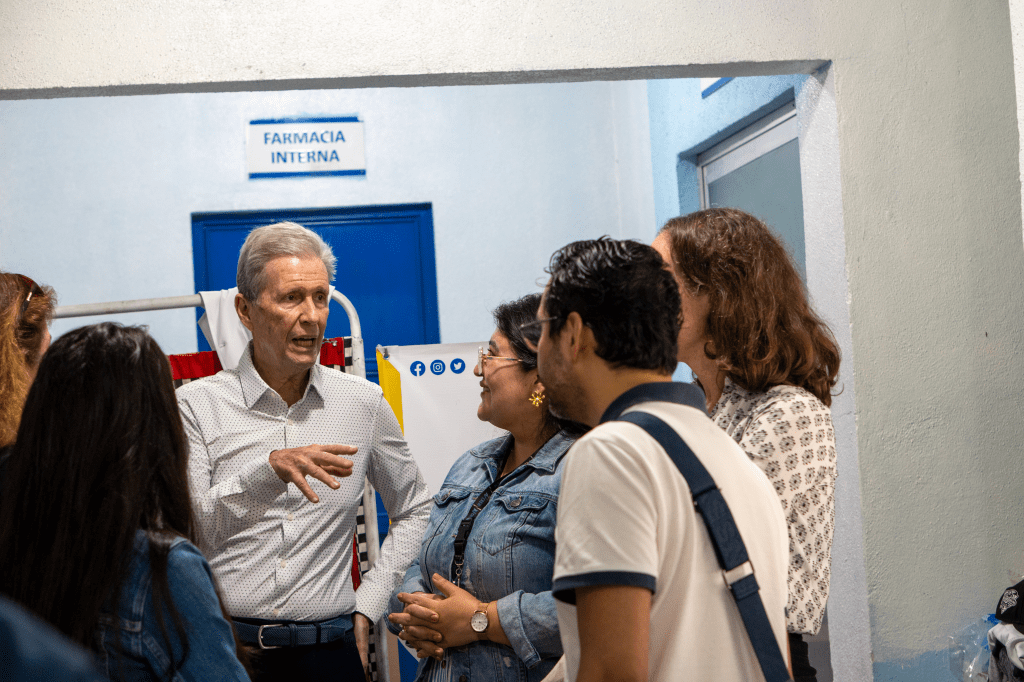
On Day 1 we visited an APROFAM clinic visit 2 hours away from Antigua. It was a public health clinic that APROFAM was borrowing for the day. It was spotless. They provided good quality compassionate care.
It was vasectomy day. I scrubbed up and observed one procedure. The patient was a man about age 35 or 40 with a few children (exact number undisclosed to me). Lively music was playing in the operating theater. A doctor, nurse and orderly did the procedure. It was very quick, 7 minutes, with lots of chatter with the patient who said he didn’t feel a thing. My high school Spanish being limited, I couldn’t understand what they were talking about – maybe football. All was very professional and relaxed. Patient was at ease and hopped off the table at the end. 10 more patients were done that morning. An 11th got a call from his office and left before his procedure.
The clinic also does tubal ligations for women but not today.
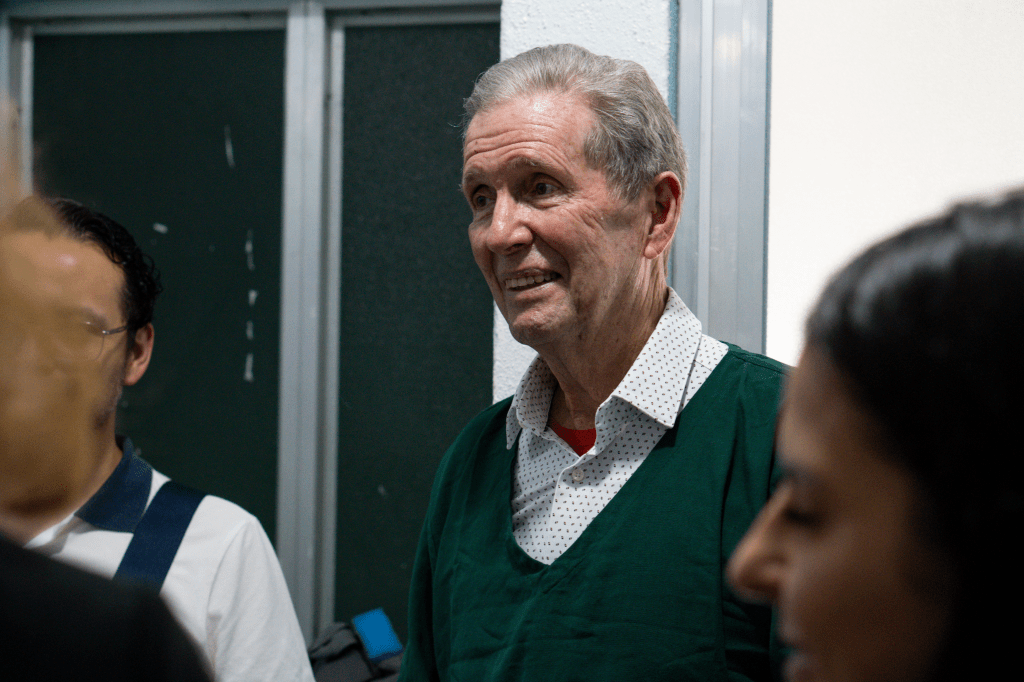
Below — ACS in scrubs


ACS with clinic and Fos staff and volunteers.
We next visited a health promoter’s house. She is part of the WINGS network. She is a nurse who does counseling and also inserts implants and IUDs in her home as well as providing injections and pills. Her 9-year-old daughter and family cat sat in, as well as an adult patient. There was also a teenaged male sex educator who spoke of his speaking to teens in schools. In the living room/consulting room was a chapel so that the patients can pray as they get care and feel absolved.

ACS with the WINGS nurse-educator.
These organizations are doing life saving work in very difficult circumstances.
Last week I spent five days in the Dominican Republic visiting the Fos Feminista partner Profamilia, which has 7 clinics and 2 mobile health units.
The DR is poor. Baseball is the national sport. Each major league team has a baseball academy in the DR. Sugar cane employment is declining. Teen pregnancy is very high – about half of teens give birth. Girls do not see much of a future.
The clinics were spotless, full of clients and well run. You could tell the dedication of the staff and their professionalism. Clients were treated with respect.

Abortion is totally illegal in the DR, so it is not provided. The clinics do offer harm reduction, where they explain what to do in the event the client has an illegal abortion and has complications. The Profamilia clinics can and do manage any complications or tell the patients go to a hospital. They are working with the legislature to allow three exceptions to the ban on abortion – to save the life of the mother, fetal abnormality and rape.
The clinics offer a full range of contraception and sterilization, male and female. The pill and injection are the most common methods. Some women have to disguise their pills as vitamins from their husbands. Many men in DR want many more children than the women want. Emergency contraception is becoming used as a method of contraception. It becomes less effective if used frequently.
Pills and other methods are sold without prescription in pharmacies. Profamilia does extensive community distribution of pills.
There is universal screening for domestic violence, which is common. The clinics offer legal services for victims. There is a shortage of safe houses – there are 12- and few relocation services. There is a national DV hotline.
Men constitute 20% of patients, mostly for urology. One clinic did 20 vasectomies a day.
The clinics do HIV counseling and treatment.
The clinics offer general health care and pediatrics but no deliveries.


The services are free if the client cannot pay. There is national health insurance.
Maternal mortality is high but declining. It is about 107 per 100,000 in 2020 and increased during Covid. Illegal abortion now constitutes 8% of maternal deaths – it was 20% during Covid.
We visited three mobile health unit sites in remote villages and batayas- these are Haitian immigrant villages where sugar cane workers and farmers live. Sugar cane has become largely mechanized and many Haitians are scratching out a living farming or manual labor. $6 a day is the average wage in the batayas. If a person needs to get to the nearest hospital it costs $12 for transport. The Hailtian migrants fear hospitals due to deportation threats.


The community promoters , or promotores as they are called, are villagers trained by Profamilia, who live and travel around the batayas bringing contraceptives and general health care. The mobile health units are on a circuit and come every 30 days or so. One promoter just got her law degree and another is running for the local legislature.


 Alexander Sanger